
Many business owners assume an equipment appraisal is a one-time event, something you do when buying, selling, or financing assets. In reality, equipment values change constantly. Market demand, usage, technology shifts, and economic conditions can all dramatically affect what your equipment is worth. So the real question isn’t whether to re-appraise. It’s when should you re-appraise equipment you already own to protect your business and make better financial decisions.
Why Equipment Values Change Over Time
Even well-maintained equipment doesn’t hold a static value. Common factors that impact value include:
- Shifts in the used-equipment market
- Technological obsolescence or automation upgrades
- Changes in OEM support or parts availability
- Utilization rates and maintenance history
- Broader economic and industry conditions
Relying on outdated appraisal data can quietly expose your business to financial and legal risk.
Market demand, technological changes, and broader economic conditions can all influence equipment value over time, particularly during periods of economic expansion or contraction tracked by agencies like the U.S. Bureau of Economic Analysis (BEA).
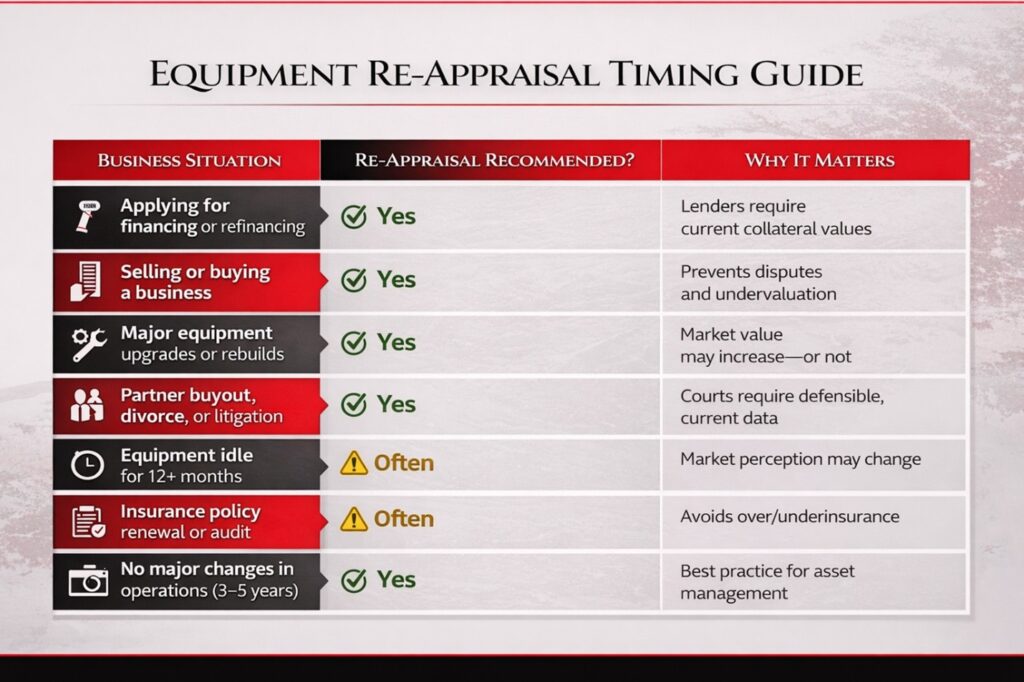
Key Situations That Trigger a Re-Appraisal
1. Before Financing or Refinancing
Lenders require current, defensible values. An outdated appraisal can limit loan amounts, slow approvals, or weaken collateral strength.
If you’re asking when should you re-appraise equipment, any financing event is a clear trigger.
2. Before Selling or Transferring a Business
Equipment often represents a major portion of tangible asset value. Old numbers can lead to:
- Undervaluation
- Buyer disputes
- Delays during due diligence
A current appraisal strengthens credibility and simplifies negotiations.
3. After Major Equipment Upgrades or Rebuilds
Not all upgrades increase value, but many do.
Re-appraise after:
- Major rebuilds or refurbishments
- CNC or automation retrofits
- Life-extension investments
An updated appraisal reflects market value, not just capital spent.
4. During Legal, Ownership, or Partner Disputes
Situations such as:
- Partner buyouts
- Shareholder disputes
- Divorce proceedings
- Litigation or insurance claims
require independent, current appraisals that can withstand scrutiny.
5. When Equipment Has Been Idle
Idle equipment doesn’t always lose value, but market perception can change quickly.
A re-appraisal helps determine whether:
- Holding still makes sense
- Liquidation is the better option
- Value erosion has already occurred
This is one of the most overlooked answers to when should you re-appraise equipment you already own.
6. When Reviewing Insurance Coverage
Insurance values should reflect real-world replacement or market value.
Outdated appraisals can lead to:
- Overpaying premiums
- Underinsurance
- Disputed claims
Re-appraisals help align coverage with reality.
7. As Part of Long-Term Asset Planning
Even without a major event, many companies re-appraise equipment every 3–5 years to support:
- Capital planning
- Tax and accounting strategies
- Asset lifecycle management
How Often Should Equipment Be Re-Appraised?
While there’s no one-size-fits-all rule, common guidelines include:
- Every 3–5 years for stable operations
- Immediately before financing, sale, or legal action
- After significant market or industry shifts
If you’re unsure when should you re-appraise equipment, a qualified appraiser can review your situation and advise without obligation.
The Risk of Using Outdated Appraisals
Relying on old valuations can lead to:
- Missed financing opportunities
- Weak negotiating positions
- Legal and compliance challenges
- Misaligned insurance coverage
A professional re-appraisal replaces guesswork with clarity.
Final Thoughts
Understanding when should you re-appraise equipment you already own is about more than compliance, it’s about protecting asset value and making smarter business decisions.
If your appraisal no longer reflects today’s market conditions, it’s likely costing you more than you realize.
