
An Industrial Machinery Appraisal provides an independent opinion of value for machinery, equipment, and production assets located within a factory. Manufacturing facilities can contain hundreds or even thousands of individual assets. These assets often work together as part of an integrated production process.
Every factory presents a different valuation challenge. A textile mill operates differently from a steel processing facility. Likewise, a food processing plant has different equipment and market dynamics than an automotive parts manufacturer.
Understanding the industry, machinery, production process, and secondary market becomes essential when appraising factory equipment.
Industrial Machinery Appraisal for Manufacturing Facilities
A factory appraisal usually starts with identifying the machinery and understanding how the facility operates.
The appraiser may encounter individual machines, complete production lines, material handling systems, utilities, laboratory equipment, and support assets. Some facilities contain highly specialized equipment designed for one manufacturing process.
Other factories use machinery with broad applications across several industries.
This distinction can significantly influence value. Equipment with many potential buyers generally has a larger secondary market. Highly specialized machinery may have fewer potential purchasers.
The appraiser must consider these factors when developing a credible opinion of value.
Industrial Machinery Appraisal for Textile Factories
Textile factories can contain equipment for spinning, weaving, knitting, dyeing, finishing, cutting, and material handling.
Typical assets include looms, knitting machines, winders, carding machines, dyeing systems, dryers, inspection equipment, and fabric finishing lines. Automated cutting and packaging systems may also represent significant value.
Technology plays an important role in textile equipment values. Older machinery may remain productive but struggle to compete with newer automated systems.
An appraiser should also consider whether the equipment serves a broad textile market or produces a specialized product.
Steel Mills and Metal Processing Facilities
Steel and metal processing factories often contain large, complex machinery.
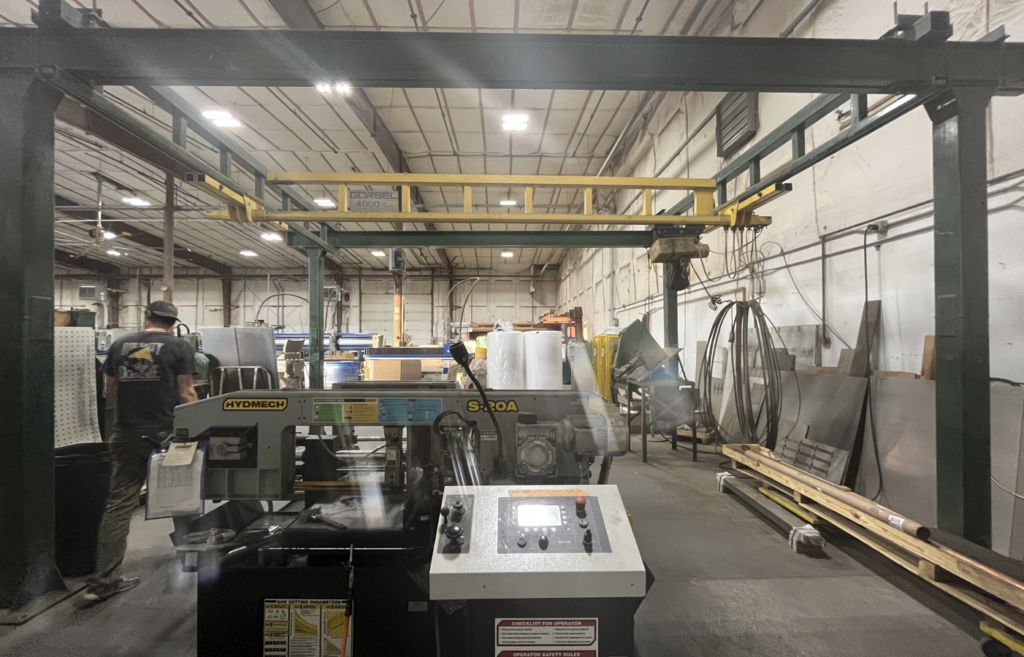
Equipment may include rolling mills, slitters, cut-to-length lines, leveling systems, presses, furnaces, shears, cranes, and coil handling systems. Facilities may also operate CNC machines, welding equipment, saws, and material handling equipment.
Capacity becomes an important valuation factor.
Buyers often evaluate maximum coil width, material thickness, tonnage, speed, horsepower, and production capabilities. The manufacturer and age of the equipment also influence demand.
Removal costs can become substantial for large steel-processing machinery. The appraiser should understand how these costs affect marketability and potential liquidation scenarios.
Industrial Machinery Appraisal for Food Processing Plants
Food processing factories can range from small specialty operations to enormous automated facilities.
The machinery depends heavily on the product.
A bakery may contain mixers, ovens, proofers, conveyors, depositors, cooling systems, and packaging equipment. Meat processing plants may operate grinders, slicers, mixers, smokehouses, refrigeration systems, and packaging lines.
Beverage facilities can include tanks, fillers, cappers, labelers, pasteurizers, conveyors, and bottling systems.
Food processing equipment creates several unique valuation considerations. Sanitation requirements, construction materials, production capacity, and product compatibility can influence secondary-market demand.
Stainless steel equipment often retains its marketability because buyers can adapt it to other food-processing applications.
Plastics and Rubber Manufacturing
Plastic factories can contain injection molding machines, extrusion lines, blow molding equipment, thermoforming machines, and auxiliary systems.
Auxiliary equipment may include dryers, chillers, granulators, temperature controllers, material loaders, and robotic systems.
Machine specifications become critical when researching comparable equipment.
For injection molding machinery, buyers may focus on clamping tonnage, shot size, tie-bar spacing, controls, and automation. Extrusion equipment requires a different analysis.
Extruder size, screw configuration, downstream equipment, cooling systems, and line speed can all affect value.
Industrial Machinery Appraisal for CNC and Precision Manufacturing
Machine shops and precision manufacturing facilities often contain significant concentrations of CNC equipment.
Common assets include CNC machining centers, turning centers, lathes, grinders, EDM machines, Swiss-type machines, and inspection equipment.
Aerospace, automotive, medical device, and defense manufacturers may operate particularly sophisticated CNC machinery.
The appraiser should consider the machine’s manufacturer, model, age, control, hours, capacity, options, and accessories. Tooling and automation can also contribute substantial value.
Technology can affect these machines quickly. An older CNC machine may remain mechanically sound while its control system becomes obsolete.
Pharmaceutical and Chemical Factories
Pharmaceutical and chemical manufacturing facilities present another specialized appraisal environment.
Equipment can include reactors, mixing vessels, tanks, centrifuges, dryers, filtration systems, pumps, laboratory equipment, and packaging machinery.
The appraiser must distinguish between equipment with general industrial applications and highly specialized systems.
A stainless steel mixing tank may attract buyers from several industries. A custom pharmaceutical production system may have a much narrower market.
That difference can substantially affect both Fair Market Value and liquidation value.
Understanding Integrated Production Lines
One of the biggest challenges in factory appraisal involves integrated production systems.
A factory may have purchased a production line for several million dollars. However, the secondary market may not assign the same value to the complete system.
The appraiser must determine whether buyers would purchase the line as a whole or separate it into individual components.
This analysis becomes particularly important during liquidation.
A specialized production line may have considerable value to another manufacturer producing the same product. However, finding that buyer could require an extended marketing period.
Individual components may have stronger markets when sold separately.
Industrial Machinery Appraisal and the Purpose of the Assignment
The intended use of an appraisal determines the appropriate definition of value.
Banks and financial institutions may request Fair Market Value, Orderly Liquidation Value, or Forced Liquidation Value. The lender’s credit criteria typically determine the required values.
SBA-related assignments may require FMV, OLV, FLV, and a Remaining Useful Life analysis.
Business owners may also require factory appraisals for acquisitions, partnership dissolutions, estate matters, divorce, insurance, or financial reporting.
Bankruptcy and distressed asset situations often require liquidation values.
The appraiser should establish the intended use and appropriate value definitions before beginning the valuation analysis.
Fair Market Value Versus Liquidation Value
Factory machinery can show substantial differences between Fair Market Value and liquidation value.
Fair Market Value generally assumes reasonable market exposure and no undue compulsion to transact.
Orderly Liquidation Value assumes a more limited marketing period. Forced Liquidation Value typically involves a significantly compressed sale period.
Specialized factory equipment can show particularly large differences between these value premises.
Time matters.
Finding an end user for a specialized manufacturing line may take months. A forced sale may not provide enough time to locate that buyer.
Factors That Influence Factory Equipment Values
Age and condition represent only part of the valuation equation.
An appraiser should consider manufacturer reputation, capacity, technology, maintenance, automation, production capabilities, and market demand. Equipment location can also influence marketability.
Economic conditions in the underlying industry also matter.
A decline within a specific manufacturing sector can create an oversupply of used machinery. Conversely, expanding industries may create stronger demand for certain equipment.
Installation and removal requirements also deserve consideration. Large machinery may require riggers, cranes, specialized transportation, and extensive disassembly.
These factors can influence how buyers approach the equipment.
Industrial Machinery Appraisal Services from the TMX Group
Factories represent some of the most complex machinery and equipment appraisal assignments.
A credible Industrial Machinery Appraisal requires more than applying depreciation to the original equipment cost. The appraiser must understand the machinery, manufacturing process, secondary market, and intended use of the appraisal.
The TMX Group provides machinery and equipment appraisal services for manufacturing facilities throughout the United States.
Assignments can include textile mills, steel processors, food plants, plastics manufacturers, machine shops, pharmaceutical facilities, and other industrial operations.
Whether a factory contains ten major machines or an integrated production facility, the objective remains the same. The appraisal should provide a supportable opinion of value based on the appropriate market and valuation premise.
