
Equipment Appraisal Cost depends on the size, complexity, location, and intended use of the assignment. A simple appraisal may cost a few hundred dollars.
A large construction fleet appraisal may cost several thousand dollars. Assignments involving multiple locations or specialized equipment can cost considerably more.
There is no universal price for every appraisal. The appraiser must understand the equipment and scope before preparing a reliable fee quote.
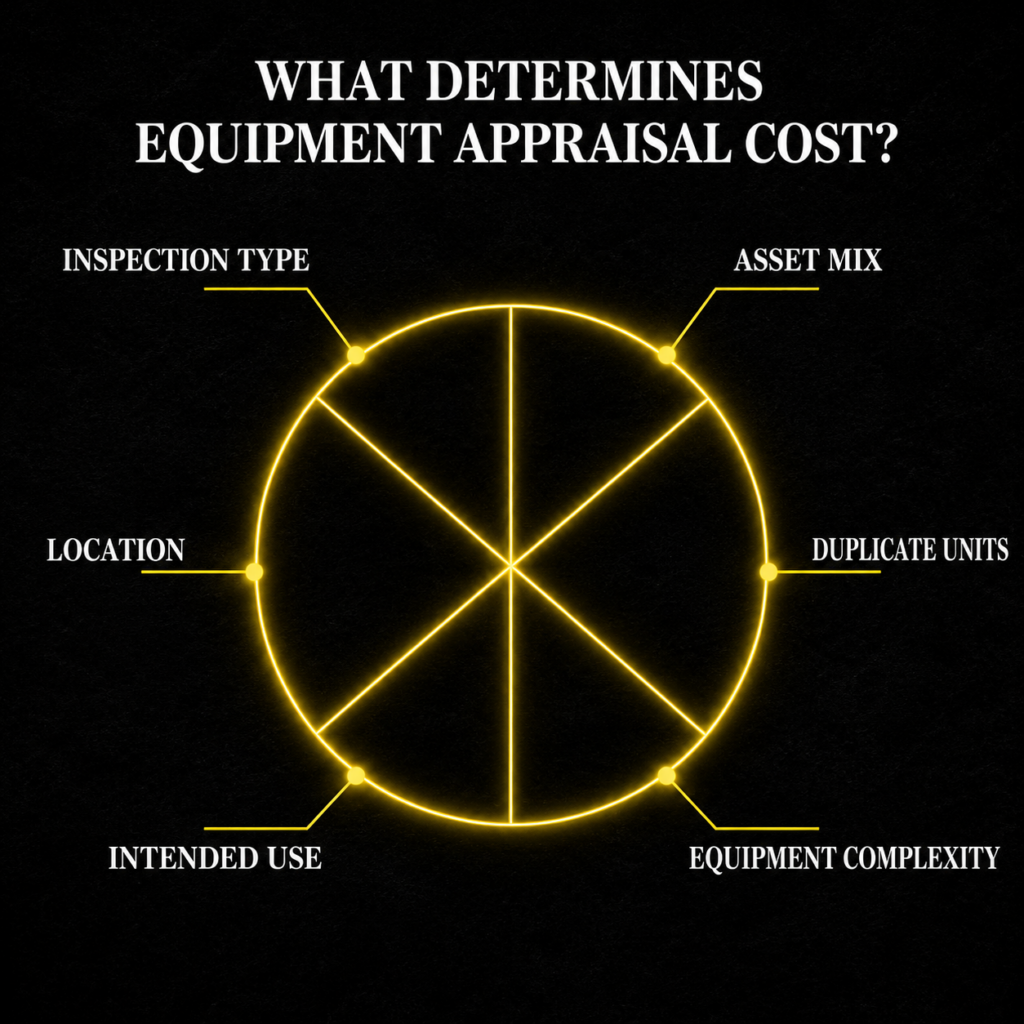
What Determines Equipment Appraisal Cost?
The number of assets is an important pricing factor. However, the total asset count does not tell the entire story.
Twenty common pickup trucks may be easier to appraise than five specialized construction machines. Equipment diversity often creates more work than equipment quantity.
The following factors commonly affect the appraisal fee:
- Desktop versus on-site inspection
- Number of assets
- Type and variety of equipment
- Duplicate units
- Equipment complexity
- Quality of the asset list
- Availability of photographs
- Number of locations
- Intended use of the report
- Required value definitions
- Delivery schedule
- Reporting requirements
A qualified appraiser should review the assignment before quoting a fee. This helps prevent unexpected costs or scope limitations.
Desktop Versus On-Site Construction Equipment Appraisals
A desktop appraisal is completed without a physical inspection. The appraiser relies on information supplied by the client.
This information may include an equipment list, photographs, invoices, maintenance records, and ownership documents. Hour-meter readings and vehicle mileage should also be provided.
Desktop appraisals generally cost less than on-site assignments. They eliminate most travel expenses and reduce inspection time.
A desktop appraisal works best when the available records are complete. Each item should include a manufacturer, model, serial number, year, and description.
Hours and mileage are also important. These measurements can have a significant effect on construction equipment value.
An on-site appraisal includes a physical inspection of the assets. The appraiser visits the equipment location and documents the machinery.
During the inspection, the appraiser may record:
- Manufacturer and model
- Serial number or VIN
- Year of manufacture
- Hours or mileage
- Attachments and options
- General condition
- Visible damage
- Tire or undercarriage condition
- Equipment location
An on-site appraisal usually costs more because it requires travel and fieldwork. However, it can provide stronger support for the final conclusions.
A physical inspection may also reveal assets missing from the original list. It can identify inaccurate descriptions or incorrect model information.
The Construction Equipment Mix Matters
Construction companies often own a wide range of equipment. A typical fleet may include excavators, loaders, dozers, skid steers, trucks, and trailers.
Other fleets may include cranes, paving equipment, concrete machines, crushers, screens, and specialized attachments.
Each equipment category has a different secondary market. The appraiser may need to research several market segments.
Common machines often have active resale markets. For example, skid steers and compact excavators are frequently listed for sale.
Specialized machines may have fewer comparable sales. This can require additional research and professional judgment.
A fleet containing 100 similar assets may be relatively efficient to analyze. A fleet containing 100 different assets will usually require more time.
The asset mix can therefore affect Equipment Appraisal Cost more than the total asset count.
Duplicate Machines Can Reduce the Cost Per Asset
Duplicate equipment can make a large assignment more efficient. A contractor may own several identical excavators, loaders, or skid steers.
The appraiser may not need to conduct separate market research for each matching unit. One primary analysis can often support several similar assets.
Each machine must still be reviewed individually. Age, hours, condition, attachments, and location may differ.
Duplicate machines do not eliminate appraisal work. However, they can reduce the average research time per unit.
Clients should identify duplicates before requesting a proposal. Similar assets should be grouped whenever possible.
A clean list helps the appraiser understand the assignment. It can also result in a more accurate and competitive fee.
Equipment Complexity and Specialized Machines
Not all construction equipment requires the same level of research. A common backhoe may be easier to value than a custom processing plant.
Complex assets may include:
- Asphalt plants
- Concrete batch plants
- Aggregate crushing systems
- Screening plants
- Large cranes
- Directional drills
- Trenchless equipment
- Specialized paving machines
- Custom service trucks
- Mining and quarry equipment
These machines may include custom controls, conveyors, attachments, or support systems. Their value may also depend on installation and removal costs.
The appraiser must determine what is included in the appraisal. A crushing plant may consist of several connected machines.
The assignment may also require installed and removed values. This creates additional research and analysis.
Specialized equipment can have a limited pool of buyers. Market data may be difficult to locate or verify.
Complex machines will generally increase the Equipment Appraisal Cost.
Age, Hours, Mileage, and Condition affect Equipment Appraisal Cost
Construction equipment values are strongly affected by age and usage. However, age alone does not determine value.
A newer machine with very high hours may show significant wear. An older machine with limited use may remain highly marketable.
The appraiser should compare the reported usage with the machine’s physical condition. Maintenance history can also provide valuable support.
Undercarriage condition is especially important for tracked equipment. Major repairs can cost tens of thousands of dollars.
Tires can also affect value. Large loader, haul truck, and crane tires can be expensive to replace.
The appraiser may need detailed photographs when an on-site inspection is not completed. Poor photographs can create uncertainty and additional follow-up.
Machines with missing hours or unknown condition require more assumptions. Those assumptions must be explained within the report.
The Quality of the Asset List affects Equipment Appraisal Cost
A detailed asset list can reduce appraisal time. It also helps the appraiser prepare a more reliable proposal.
The list should include:
- Asset description
- Manufacturer
- Model
- Serial number or VIN
- Year
- Hours or mileage
- Location
- Reported condition
- Attachments
- Ownership status
General descriptions create problems. Entries such as “excavator,” “truck,” or “trailer” do not provide enough information.
Different models from the same manufacturer can have very different values. Capacity, horsepower, configuration, and options may vary.
Missing information requires additional communication and research. This can increase the time needed to complete the assignment.
Duplicate entries can also create confusion. The appraiser must determine whether they represent separate machines or repeated records.
Intended Use Affects Equipment Appraisal Cost
The purpose of the appraisal affects the required scope. A simple internal planning assignment may have limited reporting needs.
A lender appraisal usually requires a formal and well-supported report. The lender may request both Fair Market Value and Orderly Liquidation Value.
Litigation assignments can require additional documentation. The appraiser may need to explain the analysis during a deposition or trial.
Charitable donation appraisals must satisfy specific tax reporting requirements. Bankruptcy and troubled-asset assignments may focus on liquidation scenarios.
Construction equipment appraisals may be needed for:
- Bank financing
- SBA lending
- Asset-based lending
- Mergers and acquisitions
- Buy-sell agreements
- Divorce
- Litigation
- Bankruptcy
- Insurance
- Estate planning
- Charitable donations
- Internal business planning
The intended users should also be identified. These may include banks, attorneys, accountants, business owners, or government agencies.
More demanding assignments require greater documentation. This can increase the appraisal fee.
Value Definitions and Reporting Requirements
An appraisal may require more than one value conclusion. Each value premise reflects a different sale scenario.
Common construction equipment value definitions include:
- Fair Market Value
- Orderly Liquidation Value
- Forced Liquidation Value
- Fair Market Value Installed
- Fair Market Value Removed
A lender may request Fair Market Value and Orderly Liquidation Value for each asset. Another client may need only one value conclusion.
Some assignments require gross and net values. Net values may consider commissions, transportation, removal, or selling expenses.
Each additional value premise requires analysis. The appraiser must understand the anticipated market and sale conditions.
A detailed narrative report also requires more time than a short-form report. The reporting format should match the assignment’s intended use.
Location and Travel Expenses
Location affects pricing when an on-site inspection is required. Local inspections may involve limited travel costs.
Remote assignments may require airfare, lodging, rental vehicles, or extended driving. Multiple locations can add inspection days.
The equipment may also be spread across several job sites. Coordinating access can increase the required field time.
Clients can sometimes reduce expenses by organizing the equipment before the inspection. Assets should be accessible and clearly identified.
The appraiser should receive the current asset list before arriving. This makes the inspection more efficient.
Experience and Appraiser Qualifications
Experienced appraisers often charge more than beginners. However, the client is paying for more than a number on a page.
A qualified appraiser understands equipment markets, appraisal methods, and reporting standards. Experience helps identify problems that others may overlook.
Construction equipment can have complicated configurations. Attachments, undercarriage condition, specifications, and regional demand can materially affect value.
An experienced appraiser also knows how to support the conclusions. This is important when the report will face professional review.
A low-cost appraisal may seem attractive. However, a weak report can be rejected by a lender or challenged during litigation.
The cheapest appraisal is not always the least expensive decision. Report quality and credibility should be considered when selecting an appraiser.
Typical Equipment Appraisal Cost Ranges
A limited appraisal of one common machine may cost a few hundred dollars. The final fee depends on the required report and available information.
A small desktop fleet appraisal may cost several hundred to several thousand dollars. Larger fleets generally require a higher fee.
On-site assignments usually begin at a higher price. Travel, inspection time, analysis, and reporting must be included.
Large construction companies may own hundreds of assets across multiple locations. These assignments can cost several thousand dollars or more.
Complex plants and specialized machinery may require even larger budgets. Every project should be quoted based on its actual scope.
How to Request an Accurate Quote
Provide the appraiser with as much information as possible. Start with a complete equipment list.
Explain the intended use of the appraisal. Identify the client and any other intended users.
Also provide the following information:
- Equipment locations
- Required value definitions
- Desktop or on-site preference
- Available photographs
- Inspection access
- Required completion date
- Special lender or attorney instructions
A brief conversation can help define the scope. It also ensures the proposal includes the correct level of analysis.
The appraiser can then recommend the most appropriate inspection and reporting format.
Choosing a Construction Equipment Appraiser
Equipment Appraisal Cost is influenced by the assets, inspection method, intended use, and reporting requirements. There is no single price for every assignment.
A properly prepared appraisal should identify the equipment and explain the valuation methods. It should also provide credible support for the conclusions.
When comparing proposals, clients should look beyond the fee. Qualifications, experience, report quality, and industry knowledge all matter.
The right appraiser provides more than a value estimate. The appraiser provides an independent and defensible opinion for an important business decision.
