
Energy industry equipment valuation plays a critical role as utility providers, renewable energy developers, and infrastructure operators modernize aging systems while expanding capacity to meet growing demand. Across the power and utility industry, equipment assets represent a major financial investment that directly impacts operational performance, financing opportunities, insurance coverage, and long-term infrastructure planning.
Because industrial energy assets often involve substantial capital expenditures, accurate energy industry equipment valuation has become increasingly important for energy companies, lenders, investors, and asset managers. From power generation systems and substations to transformers and utility fleet equipment, professional appraisal services help determine current market value while supporting informed financial decision-making.
As utility infrastructure evolves through renewable energy integration, grid modernization, and automation technology, equipment valuation services are becoming an essential part of asset management strategies throughout the energy industry.
Why Energy Industry Equipment Valuation Matters for Utility Assets
Power generation and utility equipment often carry exceptionally high replacement costs. Turbines, generators, transformers, substations, and industrial electrical systems may remain operational for decades, but their financial value changes significantly over time due to depreciation, maintenance history, technological advancements, and market demand.
Accurate valuation reporting allows energy companies to better understand the financial position of their infrastructure assets while supporting planning for acquisitions, financing, insurance, and regulatory compliance. In many cases, lenders and insurers require independent appraisal reports before approving financing arrangements or adjusting coverage levels.
Energy industry equipment valuation is commonly used for:
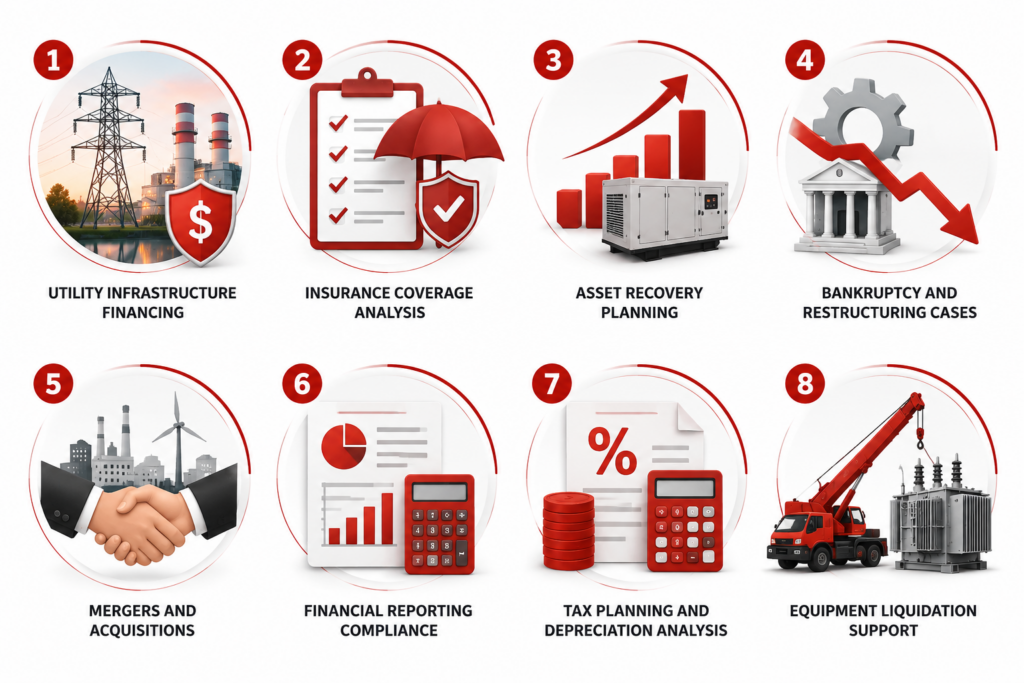
Because energy infrastructure projects often involve large-scale investment and long operational lifecycles, accurate equipment valuation helps organizations reduce financial uncertainty while improving long-term capital planning.
What Is Energy Industry Equipment Valuation?
Energy industry equipment valuation is the process of determining the fair market value, liquidation value, or replacement cost of power generation and utility-related equipment assets. Professional appraisers evaluate industrial energy systems using recognized valuation methodologies that account for market demand, operational condition, depreciation, technological relevance, and comparable sales activity.
The valuation process combines technical equipment inspection with financial analysis and industry market research. Appraisers review both the physical functionality of the equipment and broader economic conditions impacting energy infrastructure markets.
Professional appraisals may evaluate:
- Power generation equipment
- Electrical distribution systems
- Renewable energy infrastructure
- Industrial utility assets
- Energy storage systems
- Transmission equipment
- Utility fleet vehicles
- Backup power systems
Most appraisal reports focus on several standard valuation categories, including Fair Market Value (FMV), Orderly Liquidation Value (OLV), Forced Liquidation Value (FLV), and Replacement Cost New (RCN). The valuation method used often depends on the purpose of the appraisal and the type of financial transaction involved.
Key Factors That Affect Energy Industry Equipment Valuation
Several important variables influence the valuation of power and utility equipment assets. One of the most significant factors is operational condition. Energy infrastructure equipment is often subjected to demanding operating environments and long usage cycles, making maintenance quality critical to long-term value retention.
Appraisers typically review equipment age, service history, operating efficiency, component upgrades, and maintenance documentation to determine how well the asset has been preserved over time. Equipment that has undergone routine preventive maintenance generally retains stronger market value than systems with inconsistent servicing or operational deficiencies.
Market demand also plays a major role in energy industry equipment valuation. Utility infrastructure demand can fluctuate based on energy policy, economic conditions, renewable energy adoption, grid modernization projects, and industrial growth patterns. As renewable energy investment expands, certain legacy equipment categories may experience declining demand while newer technologies gain value.
Technology advancements increasingly affect energy asset pricing as well. Modern equipment with automation features, energy efficiency improvements, digital monitoring systems, and upgraded environmental controls may command stronger market valuations than outdated systems lacking modern performance capabilities.
Other valuation factors often include:
- Equipment operating capacity
- Remaining useful life
- Regulatory compliance status
- Environmental considerations
- Installation complexity
- Transportation and relocation costs
- Manufacturer reputation
- Parts availability
Because energy infrastructure equipment is highly specialized, valuation analysis often requires deep industry knowledge and technical expertise.
Energy Industry Equipment Valuation Categories
Energy industry equipment appraisals may involve a wide range of industrial infrastructure assets across traditional and renewable energy sectors. Conventional power generation facilities often require appraisals for turbines, generators, boilers, transformers, and electrical switchgear systems.
Renewable energy projects may involve valuation of solar infrastructure, wind turbines, battery storage systems, inverters, and energy management systems. Utility providers frequently seek appraisals for substations, transmission equipment, backup generators, and industrial electrical distribution systems.
Additional energy equipment categories commonly appraised include:
- Gas compression systems
- Cooling towers
- Industrial pumps
- Utility fleet vehicles
- Pipeline equipment
- Energy storage infrastructure
- Electrical testing systems
- Control room technology
Each equipment category presents unique valuation considerations because market demand, depreciation patterns, and operational lifecycles vary significantly throughout the energy sector.
Types of Energy Equipment Commonly Appraised
The energy industry relies on diverse equipment systems that support power generation, electrical distribution, utility operations, and infrastructure management. As a result, professional appraisers must understand both the technical functionality and market behavior of specialized industrial assets.
Large utility providers often maintain extensive portfolios of aging infrastructure while simultaneously investing in modern energy technology. This creates additional complexity during valuation because older systems may still retain operational usefulness even as newer technologies reshape the broader market.
Energy companies may seek equipment appraisals during:
- Infrastructure modernization projects
- Utility mergers and acquisitions
- Renewable energy expansion
- Asset disposition planning
- Equipment refinancing
- Insurance policy reviews
- Capital investment analysis
Accurate valuation reporting allows organizations to evaluate operational risk while improving asset allocation strategies throughout the equipment lifecycle.
Challenges in Utility & Power Asset Valuation
Energy infrastructure valuation presents several unique challenges that require specialized industry expertise. One major challenge involves rapid technological change. Renewable energy growth, battery storage innovation, and automation upgrades continue reshaping equipment demand across utility markets.
Certain energy asset categories may become technologically obsolete faster than traditional industrial equipment, particularly as regulatory requirements and environmental standards evolve. Appraisers must carefully evaluate how emerging technologies impact the remaining useful life and resale potential of existing infrastructure assets.
Market volatility can also affect energy equipment pricing significantly. Commodity prices, regulatory policy changes, supply chain disruptions, and shifts in utility investment patterns may rapidly influence equipment demand across multiple energy sectors.
Additional valuation challenges may include:
- Specialized equipment configurations
- Limited comparable sales data
- Environmental compliance costs
- Geographic infrastructure differences
- High transportation expenses
- Complex installation requirements
Because many utility systems are custom-built or highly integrated into operational infrastructure, determining accurate market value often requires detailed technical analysis and current industry market insight.
How Lenders Use Energy Equipment Appraisals
Lenders rely heavily on energy equipment appraisals when evaluating infrastructure financing opportunities and collateral-backed lending arrangements. Accurate valuation reporting helps financial institutions determine risk exposure while supporting underwriting compliance for large-scale utility transactions.
Professional appraisals provide objective analysis regarding the condition, marketability, and liquidation potential of industrial energy assets. Independent valuation reports also improve transparency during refinancing, restructuring, and acquisition projects involving utility infrastructure.
As infrastructure financing continues expanding across renewable energy and utility modernization sectors, lenders increasingly require detailed appraisal reports to support long-term risk management and collateral verification.
Why Professional Equipment Appraisals Support Better Energy Asset Decisions
Professional energy industry equipment valuation services provide organizations with critical financial insight that supports stronger operational and investment decisions. Updated appraisal reporting helps utility providers, infrastructure operators, and energy investors better understand the current market value of their industrial assets while improving long-term planning strategies.
An independent appraisal can also assist companies with insurance planning, capital budgeting, equipment replacement analysis, and infrastructure modernization decisions. During mergers, acquisitions, or restructuring events, accurate valuation reporting helps organizations fully assess the financial position of utility and power generation assets.
As the energy industry continues evolving through renewable integration, grid modernization, and advanced automation technology, professional appraisal services will remain an essential resource for energy companies, lenders, and infrastructure investors seeking accurate asset valuation support.
Businesses seeking professional equipment valuation services can learn more about industrial appraisal solutions through TMX Equipment Appraisal and explore additional industry insights on the TMX Equipment Appraisal News page.
