
OLV
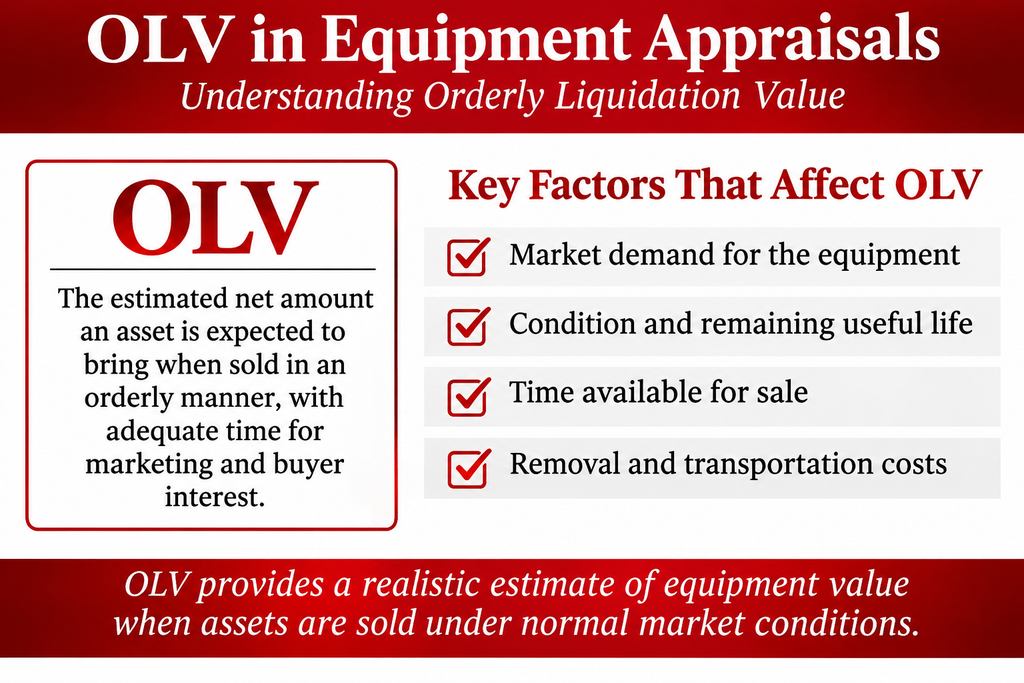
Orderly Liquidation Value (OLV) is an important concept in machinery and equipment appraisal. It represents the estimated gross amount that could be realized from selling assets individually or in groups under orderly sale conditions, with a reasonable period available to locate buyers.
Businesses, lenders, and financial professionals often rely on this type of valuation when evaluating equipment that may need to be sold. Understanding OLV helps explain how market demand, equipment condition, and the available selling period can influence asset values.
What Is Orderly Liquidation Value?
Orderly Liquidation Value refers to the estimated proceeds from selling machinery, equipment, or other assets under defined liquidation conditions.
Unlike an immediate sale, an orderly liquidation assumes sufficient time to market the assets and attract potential purchasers.
For example, a manufacturing company closing one of its facilities may have several months to sell its machinery. This allows the company to advertise equipment, contact interested buyers, and negotiate potential transactions.
The resulting valuation reflects the expected selling conditions rather than the equipment’s original purchase price.
How Is Orderly Liquidation Value Calculated?
Professional appraisers evaluate several factors when estimating the potential proceeds from an orderly equipment sale.
These considerations help establish a reasonable valuation based on the asset’s characteristics and the applicable market.
Common factors include:
- Equipment condition: Well-maintained machinery may attract greater buyer interest.
- Market demand: Equipment with an active resale market may be easier to sell.
- Age and functionality: Older or technologically outdated assets may have reduced market appeal.
- Marketing period: Additional time can provide opportunities to reach qualified purchasers.
- Location: Transportation, removal, and accessibility can influence potential offers.
For example, a commercial CNC machine in good working condition may attract interest from multiple manufacturers. However, an older machine requiring extensive repairs may have a smaller pool of potential buyers.
These differences help appraisers develop a value conclusion supported by market conditions.
When Is an Orderly Liquidation Appraisal Needed?
An orderly liquidation appraisal may be appropriate when a business or financial institution needs to understand the potential resale value of equipment.
Equipment Financing
Lenders sometimes request liquidation-based valuations when evaluating machinery used as collateral.
An OLV appraisal can help a financial institution understand the estimated proceeds that may be available if equipment must be sold under the specified conditions.
This information can support lending decisions and collateral analysis.
Business Closures and Restructuring
Companies closing facilities or restructuring operations may need to determine the estimated value of machinery they no longer require.
An orderly sale can provide an opportunity to market equipment to interested buyers rather than disposing of assets immediately.
Asset Sales
Businesses selling surplus machinery may also benefit from understanding potential liquidation proceeds.
An appraisal provides an independent valuation perspective that can assist with planning and financial decisions.
How OLV Differs From Other Equipment Values
Machinery and equipment can have different estimated values depending on the purpose and circumstances of an appraisal.
Fair Market Value generally considers a transaction between willing, knowledgeable parties under the conditions specified in its definition.
Forced Liquidation Value reflects a more restrictive selling situation, often involving a limited marketing period.
Orderly Liquidation Value assumes a defined, reasonable opportunity to market and sell the assets.
Although these value concepts are related, they are not interchangeable. The appropriate definition depends on the intended use of the appraisal and the conditions established for the assignment.
For a closer look at how these valuation methods differ, read our article on OLV and Forced Liquidation Value.
Why OLV Matters in Equipment Appraisals
Understanding liquidation value helps businesses and financial institutions make informed decisions involving tangible assets.
The estimated value of equipment may change depending on whether it remains in operation or is sold separately.
Professional appraisers must consider the relevant valuation assumptions, intended use, and market evidence before developing their conclusions.
The Appraisal Foundation provides information about the Uniform Standards of Professional Appraisal Practice (USPAP), which establish professional requirements for appraisal development and reporting.
Following recognized appraisal standards helps support credible and clearly documented valuation conclusions.
Understanding the Value of Your Equipment
Orderly Liquidation Value provides useful insight into the potential proceeds from selling machinery and equipment under reasonable marketing conditions.
Whether equipment is being evaluated for financing, restructuring, or a planned asset sale, an independent appraisal can help establish a supportable estimate of value.
TMX Equipment Appraisal provides professional machinery and equipment valuation services for businesses, lenders, and financial professionals across the United States.
Learn more about our machinery and equipment appraisal services to understand how professional valuations can support your business and financial decisions.
